
This post first had its home on my substack, At Home with Classical Piano, which is where I write regularly now. Come join me there, or subscribe to my newsletter to stay in the loop and get posts delivered straight to your inbox!
Last month I enjoyed connecting with choral accompanists from across the country in a three-day choral accompanying intensive via Zoom. Joining me were health care professionals, a music major, church choir accompanists, and pianists working with community, youth, and college choirs.
You may be wondering, what on earth would choral pianists have to talk about for three days?
My goal in this intensive was to address the monumental task of reading music in “open score,” which means that every voice part (soprano, alto, tenor, bass) is written on its own line of music, with the tenor line written an octave above where the tenors actually sing.
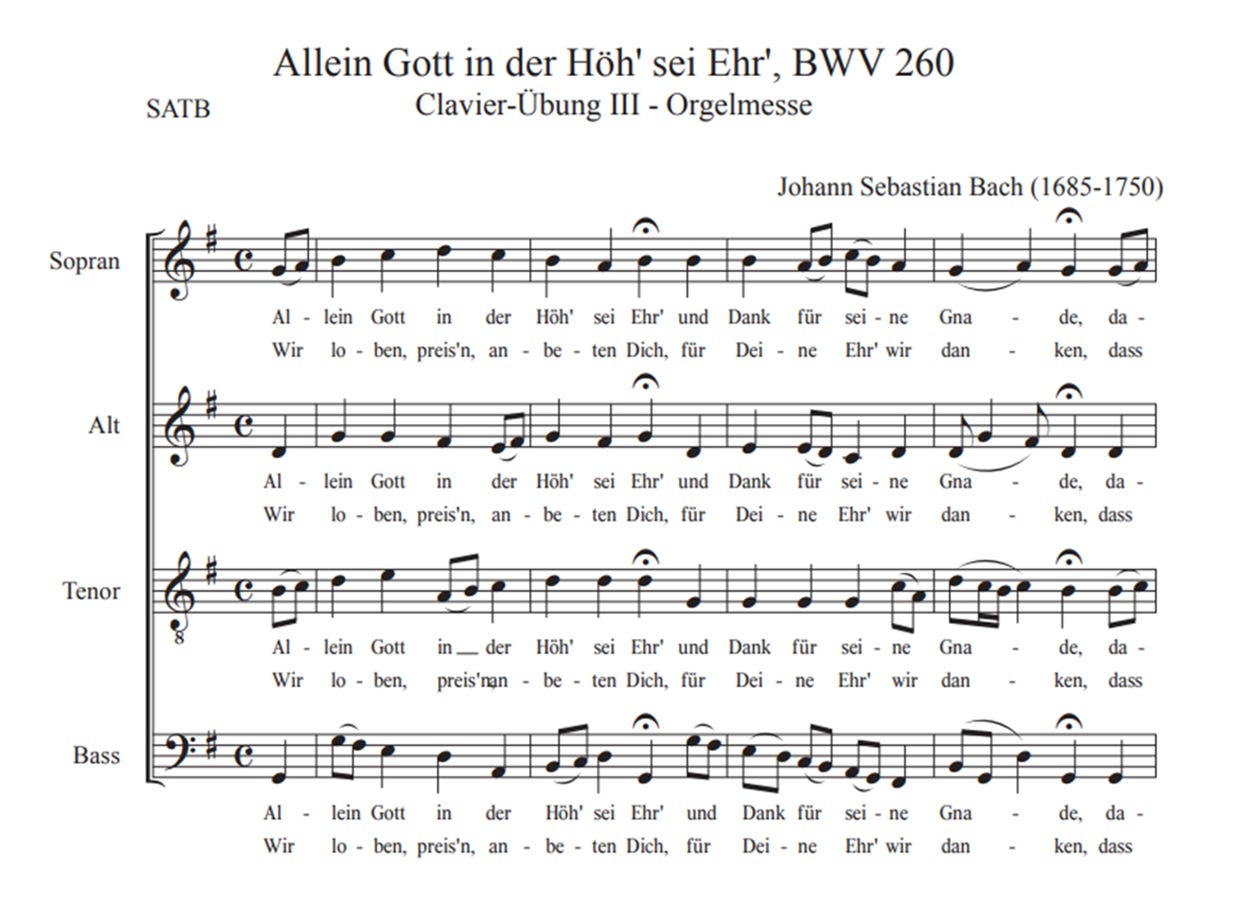
Unlike “normal” piano music, which is written in two staves, treble and bass, where the right hand takes the treble clef notes and the left hand takes the bass clef notes, music written in open score requires the pianist to make decisions about which hand plays which lines (four staves are not automatically compatible with two hands!). We also have a lot more visual information to take in at once. If you have ever studied piano, you know that there is a learning curve in playing two hands together at the same time. Not only are there physical mechanics involved, but the eyes need to “read” both the treble and bass clefs at the same time, scanning very quickly up and down and across. Imagine this times four voice parts, and you start to get an idea of the difficulty involved. To increase the challenge, the pianist must transpose the tenor line down an octave at sight.
A very accomplished solo pianist can look at parts written in open score for the first time and feel paralyzed. For one thing, we are trained to play every note on the page - but in open score, it is sometimes impossible to physically play all the notes (and playing all the notes is not always beneficial for the choir!). There is also the challenge of scanning four lines instead of two. And, unlike in solo piano practice, where we can take the parts one hand at a time and work slowly before putting them together, a choral accompanist does not have this luxury in the choir rehearsal. Rather, she is expected to read all of the parts in real time so that the choir members can hear what they are supposed to be singing.
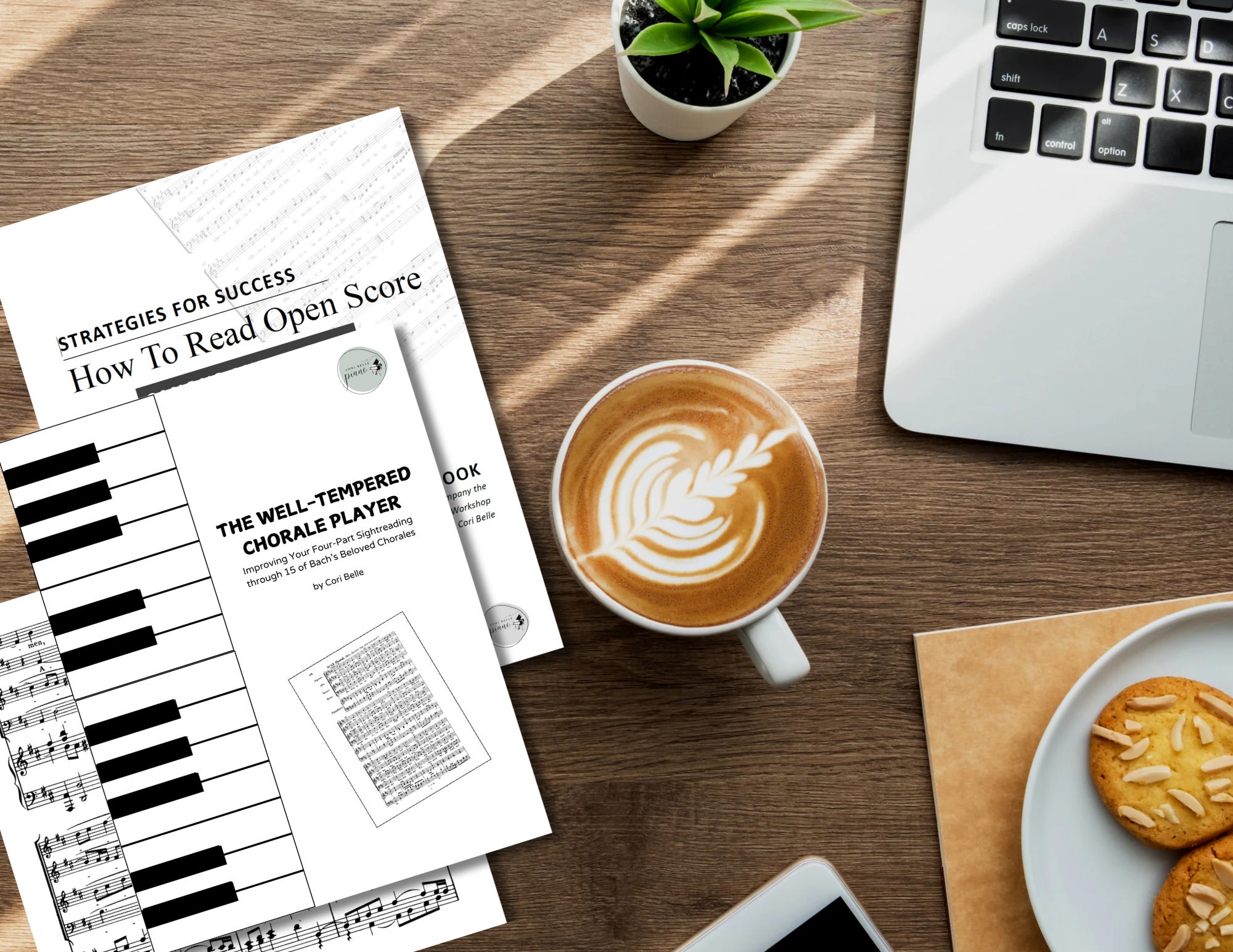
It may sound daunting, but this is absolutely a skill that can be taught and acquired over time. And I’ve developed several workshops to teach this skill progressively. This most recent choral intensive combined my two workshops on How to Read Open Score with a newly developed workshop on Bach chorales. Taken together, the three workshops present strategies to read parts in open score progressively, from identifying harmonic foundations to layering parts to becoming a problem-solver and making wise choices about what to play and what not to play.
In our time together, these wonderful pianists were fully invested, asking great questions, and contributing to a collegial feel. They came in asking:
- How to read the tenor line
- What to do in fugal sections (how to decide what to play and what to leave out)
- How to manage all the voice entrances
- What to do with voice crossings
- How to manage a director’s expectations when we’re expected to “play everything”
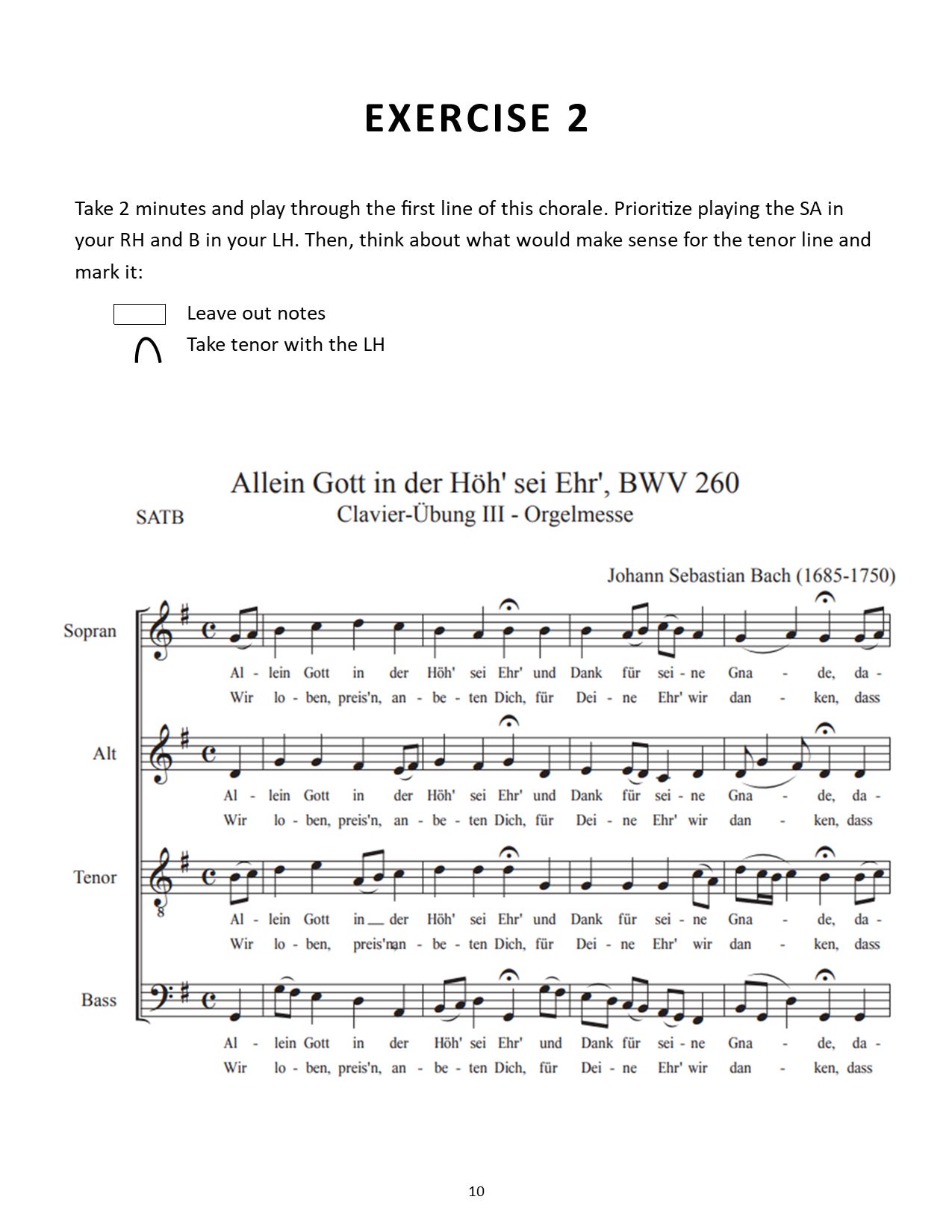
Each day we worked through workbooks on actual choral score excerpts from Bach’s cantatas, Haydn’s Creation, Handel’s Messiah, and more, marking the music and identifying strategies for scanning the score and identifying what is most important to play. I provided homework suggestions, tip sheets, a Triage chart, and appendices with even more music to practice after the intensive ended.
The participants were grateful for the training, commenting:
“Thank you so much for the session and knowledge!”
“Much, much gratitude!”
…and rating the intensive as “extremely valuable” in giving them strategies to improve their open score reading.
When asked what aspects of the workshop were most valuable, they said:
“Learning which parts of a score to prioritize”
“I'm not sure I could choose! info on voice crossings; the "triage" flow chart; the reminder it's OK to not play everything the first go-through when it's "at sight"
To my knowledge, this is the most comprehensive resource available to choral accompanists. Books and courses on accompanying often focus on playing for a singer or instrumentalist and considering things like balance, rapport, musicality, and interpreting the score. Choral accompanying may get a mention, but it is often not the focus of a class; however, it is a role most pianists will take on at some point in their lives. Inevitably, if you are a part of a school or church and people know you play the piano, you will be asked to play for the choir! Playing for a choir is also a nice way to earn consistent income, with its weekly rehearsals and seasonal performances (unlike freelancing, which is typically made up of one-off gigs).
I am happy to announce that the whole Choral Intensive is now available for purchase as a set of on-demand recordings, with their associated workbooks. In addition, there is ongoing support available through my Choral Accompanists Facebook group and individual coaching (click here and scroll to the bottom) offered for anyone wanting guidance on specific repertoire.
Summer is a fantastic time to invest in your own professional development and gain a toolkit of strategies for reading open score efficiently so that you keep your sanity while adequately supporting your choir. You can enter at your own skill level and choose which exercises are most beneficial for you to work on. Your confidence will grow as you learn to identify what to prioritize and your practice time will be more efficient as you learn to mark your score in ways that will help you succeed in rehearsal.
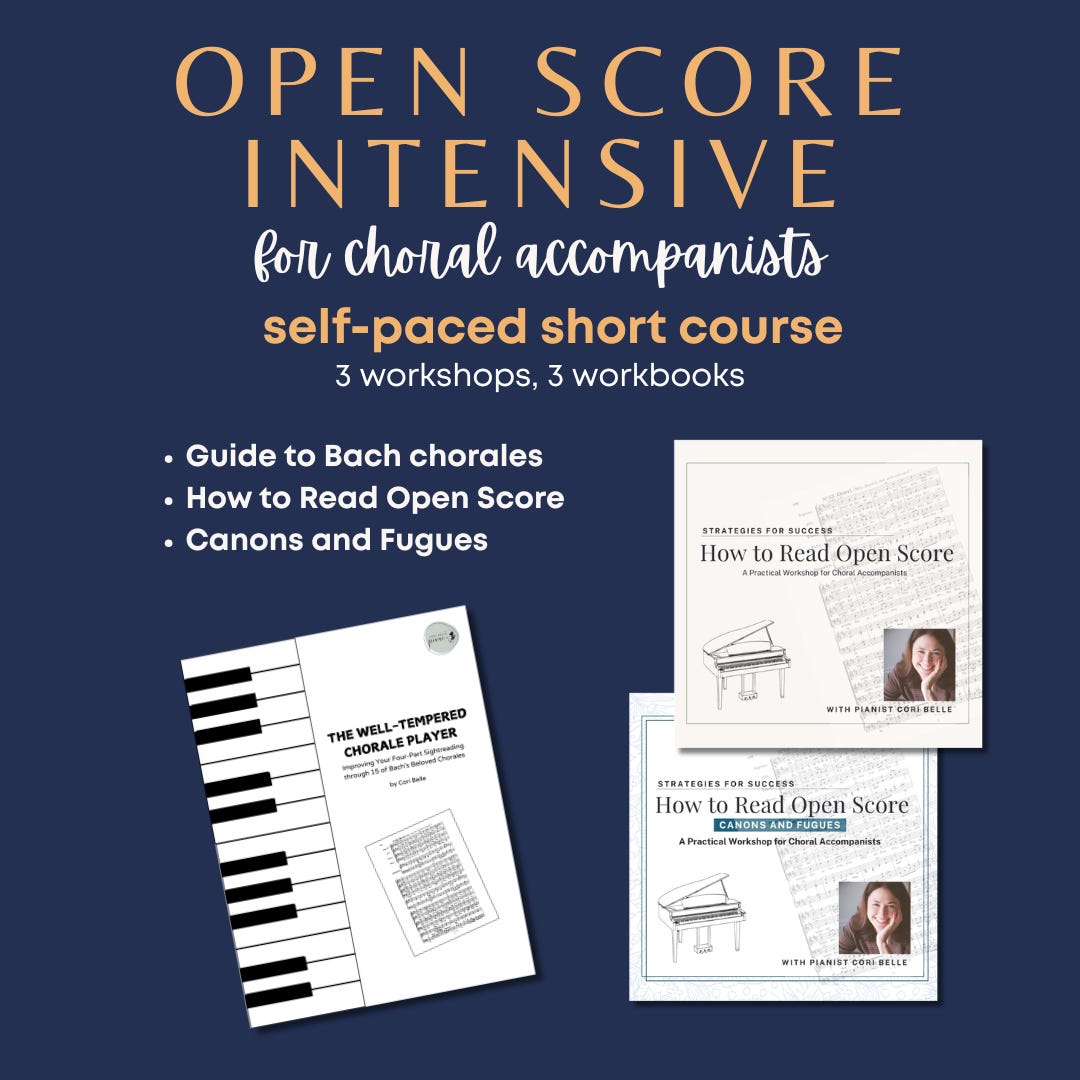
I hope you will take advantage of these materials or share this post with a friend! If you’re not quite ready to jump into the full intensive, the workshops are also available individually on my website, as well as a growing number of articles and resources on choral accompanying.
I wish you the best as you continue to work to support your choir. It is such a privilege to be able to make beautiful music with others. 🎶
Happy music-making!